

Why Your Next Chapter Matters More Than Your Last
Why storytelling, visibility, and human connection remain a founder's greatest competitive advantage in an AI-driven world.

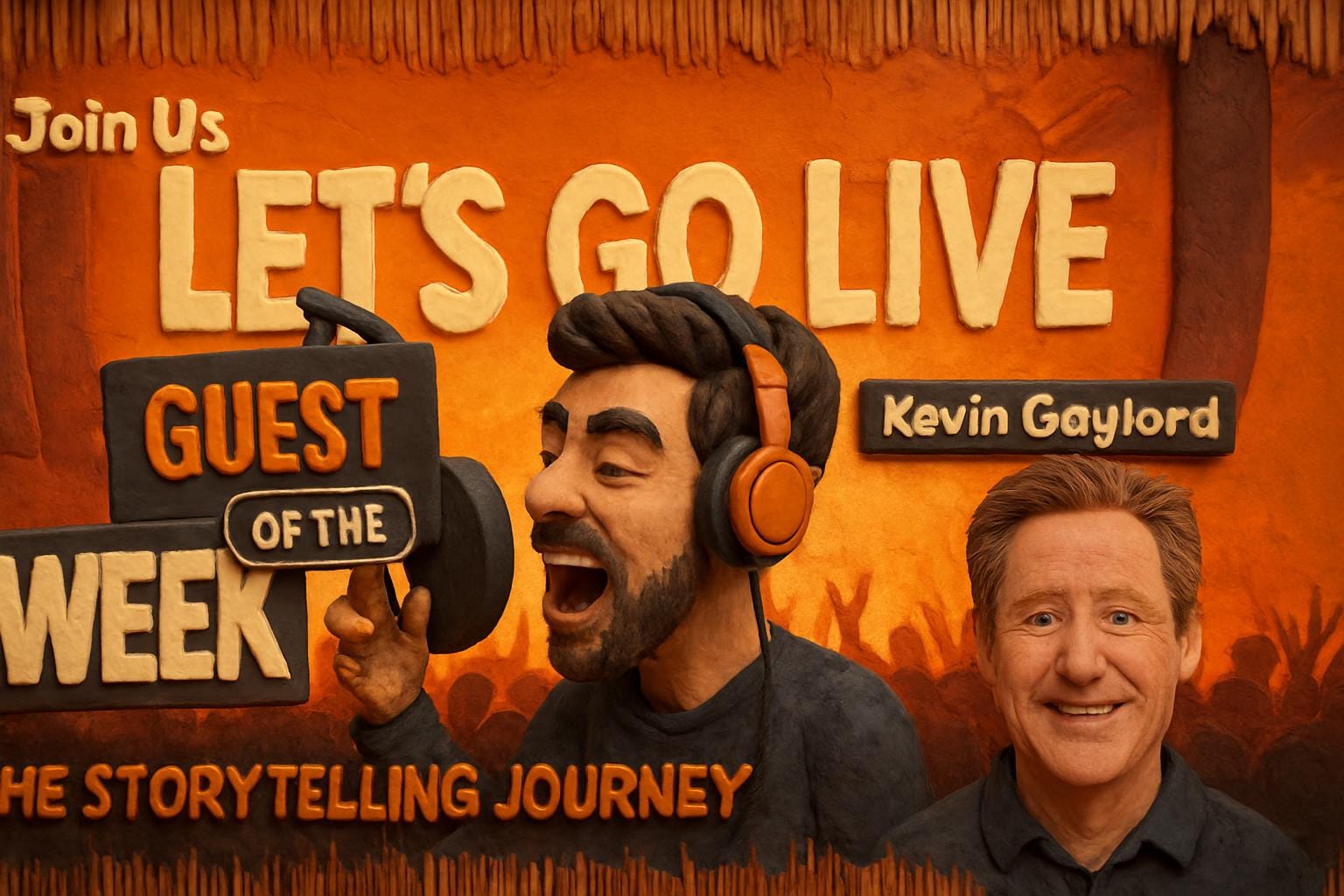
Every livestream creates a moment. But the real value isn’t in the moment itself. The real value comes when we take the conversation, extract the lessons, and redistribute the narrative across multiple content formats so the message continues working long after the cameras stop rolling.
That’s exactly why I host these conversations, so founders can see what’s possible
and imagine themselves stepping onto the stage.
As founders, we're often told to focus on building products, growing revenue, and scaling operations. But none of those things happen without connection. The conversations we have, the stories we share, and the relationships we build often become the catalyst for our next opportunity. That's why I continue to invest in these livestream conversations. They create space for ideas to surface, experiences to be shared, and connections to form in ways that rarely happen through traditional marketing alone.
This week’s episode of The Storytelling Journey reminded me why storytelling remains one of the most powerful business tools available.
A Conversation About Reinvention
Our guest, Kevin Gaylord, shared what many founders, consultants, and executives quietly experience but rarely discuss publicly.
After spending more than a decade leading organizations through growth, acquisitions, operations, and transformation, he found himself navigating an unexpected chapter.
A consulting business launched with optimism entered an increasingly crowded marketplace. Promising opportunities appeared and disappeared and suddenly the question became:
“What’s next?”
What struck me wasn’t the uncertainty. It was Kevin’s willingness to talk about it openly. Too often we only tell the success story after the ending is written. But some of the most valuable stories happen while we’re still figuring things out.
As founders and business owners, we all encounter seasons where the path forward isn’t perfectly clear. The lesson wasn’t about avoiding uncertainty. The lesson was about continuing to move through it.
The Story Beneath the Business
One of the recurring themes throughout the conversation was the idea that our experience doesn’t lose value simply because the marketplace changes.
In fact, experience becomes more valuable when we learn how to communicate it effectively. Kevin shared how he launched Ops Sherpa to help businesses solve operational challenges. What emerged wasn’t a discussion about a business pitch, it became a conversation about identity.
How do we continue creating value when the industry changes?
How do we stay relevant when technology evolves?
How do we tell our story in a way that helps others understand what we bring to the table?
The answer kept coming back to storytelling. Not storytelling as entertainment:
Storytelling as communication.
Storytelling as leadership.
Storytelling as positioning.
Storytelling as human connection.
AI, Creativity, and the Human Element
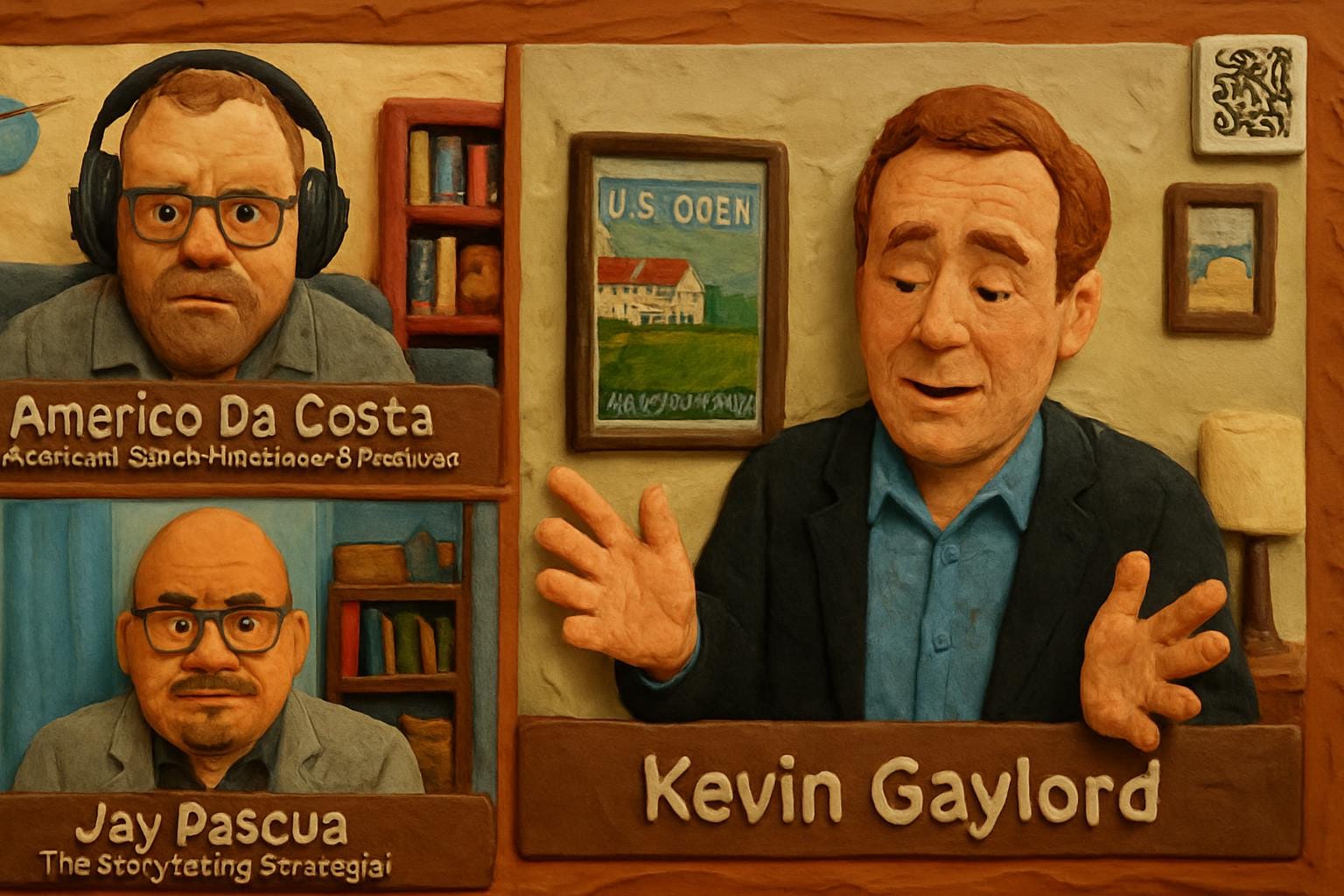
One of the most interesting moments came when Kevin described using AI as a creative thought partner. Not to replace his thinking, not to replace his voice, but to help him keep moving forward when he needed fresh ideas.
He shared how a simple AI-assisted clay-mation video became more than a content experiment. It became proof to himself that he could still create. That insight resonated deeply. Technology can accelerate creativity, but creativity still begins with people.
Later in the conversation, Kevin shared a remarkable story from his customer experience leadership days. His team launched an automated self-service solution expecting customer satisfaction to improve.
Instead, satisfaction scores dropped. After studying the data, they discovered something surprising:
Customers didn’t simply want faster service.
They wanted to feel like a human being had participated in the process.
When they intentionally reintroduced human touchpoints, performance improved dramatically.
It was a powerful reminder:
Technology scales processes.
Storytelling scales relationships.
Leadership Is About People, Not Dashboards
The conversation eventually shifted toward leadership, customer experience, and operational excellence. What stood out was a lesson every founder should remember:
Metrics are indicators.
They are not reality.
A dashboard can tell you what happened.
A conversation can tell you why.
Both Kevin and I shared examples from contact center leadership where organizations became obsessed with efficiency metrics while unintentionally damaging customer relationships.
The lesson was simple:
If you optimize exclusively for speed, you may sacrifice connection. If you prioritize connection, loyalty often follows. Loyalty is where long-term growth lives.
Why These Conversations Matter
One of my favorite moments happened when we reflected on the difference between content and conversation. A short video may catch someone’s attention.
A livestream creates an opportunity for people to stop, engage, ask questions, and discover alignment. That’s why live content remains such an important part of the strategy I coach over on Your Stage Live Community.
Real-time conversations create opportunities that edited content alone cannot. Relationships are built in dialogue, trust is built in dialogue, opportunity is built in dialogue, and sometimes a single conversation can open a door nobody expected.
This episode wasn’t simply about operations, consulting, AI, leadership, or storytelling. It was about recognizing that every chapter of our story has value even when we’re still writing the next page.
The challenge isn’t having a perfect story. The challenge is being willing to tell it.
Key Q&A From The Conversation
Q: What role does storytelling play in business growth?
Answer: Storytelling helps founders communicate value, build trust, differentiate themselves in crowded markets, and create alignment with customers and opportunities. A great story often becomes the bridge between expertise and visibility.
Q: How do you stay motivated during uncertainty?
Answer: Kevin explained that sometimes it takes only one good conversation to restore momentum. Community, relationships, and consistently showing up each day become critical during uncertain periods.
Q: Can AI help without replacing authenticity?
Answer: Yes. AI can be used as a creative collaborator and brainstorming partner while the human remains responsible for the ideas, perspective, and lived experience behind the content.
Q: What happens when businesses prioritize efficiency over humanity?
Answer: Customer satisfaction often declines. People want to feel heard and understood, not simply processed faster. Reintroducing human connection frequently improves both customer experience and business outcomes.
Q: What’s the difference between content and conversation?
Answer: Content gets attention. Conversations create relationships. Livestreams create opportunities for real-time connection, trust-building, and collaboration.
This is what happens when livestreaming and discovery come together. Real conversations, real insights, in real time.
Step into the experience. Watch the full episode on YouTube.